|
Colleagues,
I’d like to briefly share a recent case that highlights an important pattern of peri-implant bone loss increasingly reported in the literature — “Middle Implant Syndrome.”
A recent case series published in Clinical Advances in Periodontics (Prete et al., 2024) describes advanced peri-implant bone loss occurring preferentially around the middle implant of 3-implant splinted fixed dental prostheses.
What the Literature Suggests
- The middle implant in splinted 3-unit FDPs appears to have a higher biologic complication rate.
- Small vertical discrepancies in implant platform height (≥0.5 mm) may increase crestal bone loss.
- In many reported cases, the most apically positioned implant demonstrated the least bone loss.
- The phenomenon is likely multifactorial (prosthetic fit, stress distribution, cleansability, maintenance).
Case from Our Office
A patient presented with a splinted 3-unit implant-supported FDP replacing #13–15.
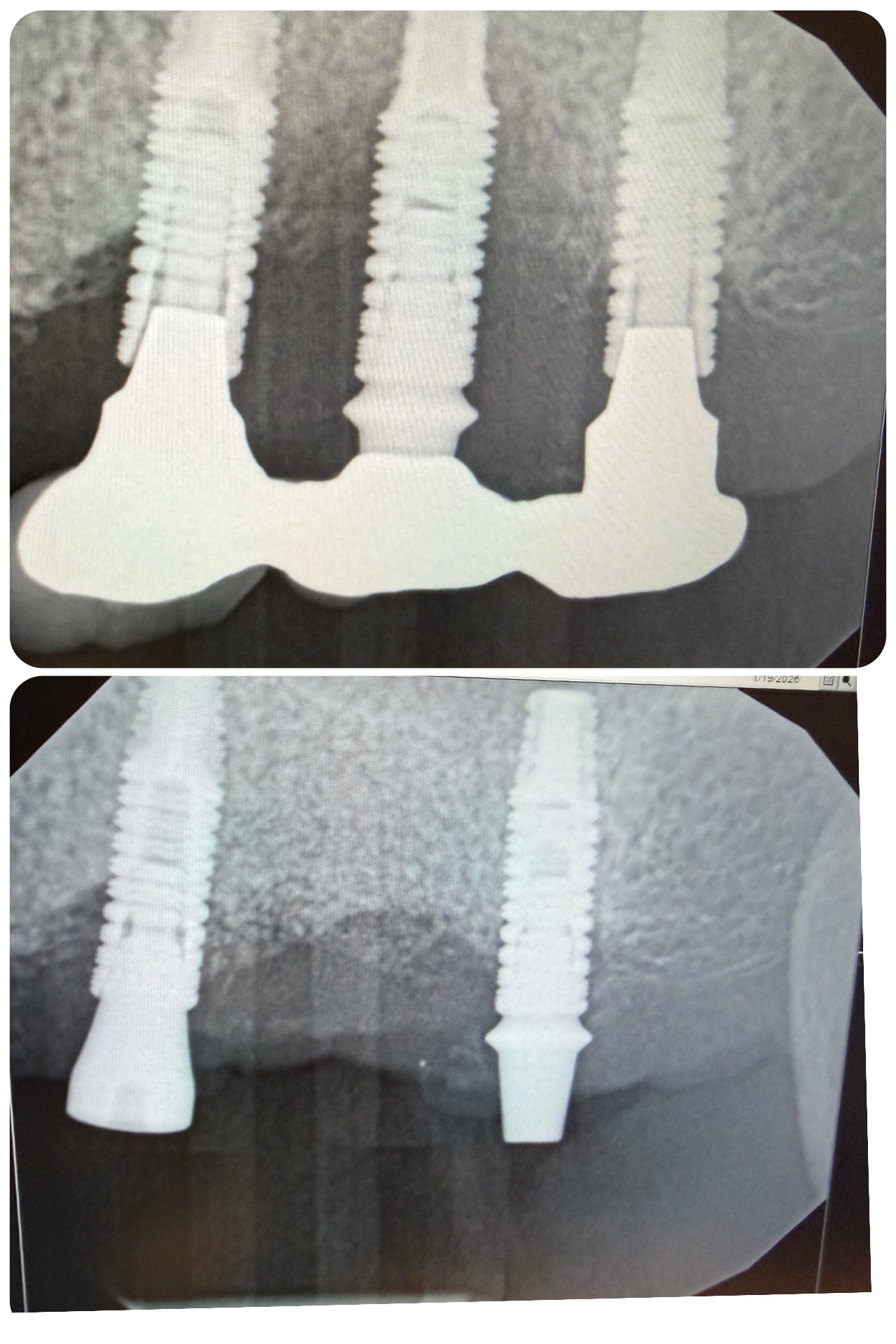 |
| Radiograph: Severe circumferential bone loss localized to the middle implant (#14) |
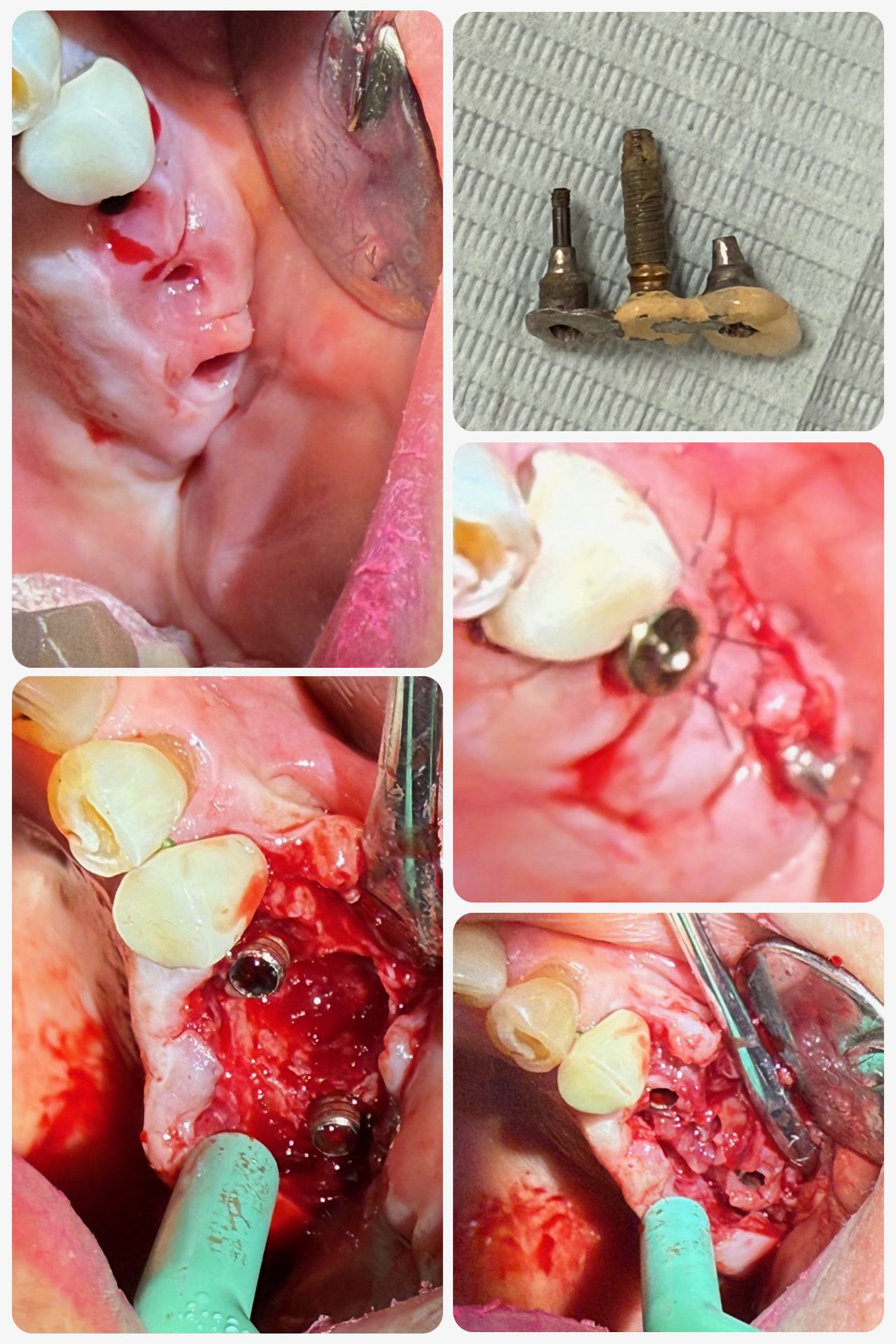 |
| Clinical View: Intraoral presentation of the splinted 3-unit implant-supported FDP (#13–15) |
Findings:
- Severe circumferential bone loss around the middle implant (#14)
- Stable bone levels at #13 and #15
- Pattern consistent with the “middle implant” presentation described in the literature
Treatment
- Explantation of implant #14
- Surgical debridement of #13 and #15
- Irrigation with 3% hydrogen peroxide and sterile saline
- Grafting with freeze-dried bone allograft and collagen membrane
- Primary closure achieved
Healing is progressing well. The restorative plan is a new 3-unit implant-supported FDP spanning #13–15 with careful attention to passive fit, platform alignment, and hygienic contours.
Clinical Takeaways
When restoring or evaluating 3-implant splinted prostheses, consider:
- Assessing for vertical platform discrepancies radiographically
- Evaluating cleansability and emergence profile design
- Monitoring the middle implant closely at maintenance visits
- Considering whether three adjacent implants are best restored as splinted vs. individual units
- Reinforcing strict peri-implant maintenance
While splinting may offer mechanical advantages, this growing body of literature suggests that biologic risk—particularly to the middle implant—should not be overlooked.
As always, I’m happy to collaborate on treatment planning or maintenance protocols for your implant patients.
Best,
Matthew Flaherty, DDS
|


