


Optimizing Soft Tissue Outcomes with Delayed Grafting
Dear Colleagues,
In the pursuit of optimal hard and soft tissue outcomes, the timing of socket grafting remains a key
consideration—especially in the esthetic zone. This week, I’d like to share two contrasting maxillary
incisor cases that highlight the benefits of delayed grafting in preserving the mucogingival architecture
and vestibular depth, both of which are essential for long-term esthetic and functional success.
Case 1: Immediate Grafting with Primary Closure
This case involved a maxillary central incisor with a large facial wall defect. Tooth #8 was extracted and
immediately grafted. Tension-free primary closure was achieved through a coronally advanced flap.
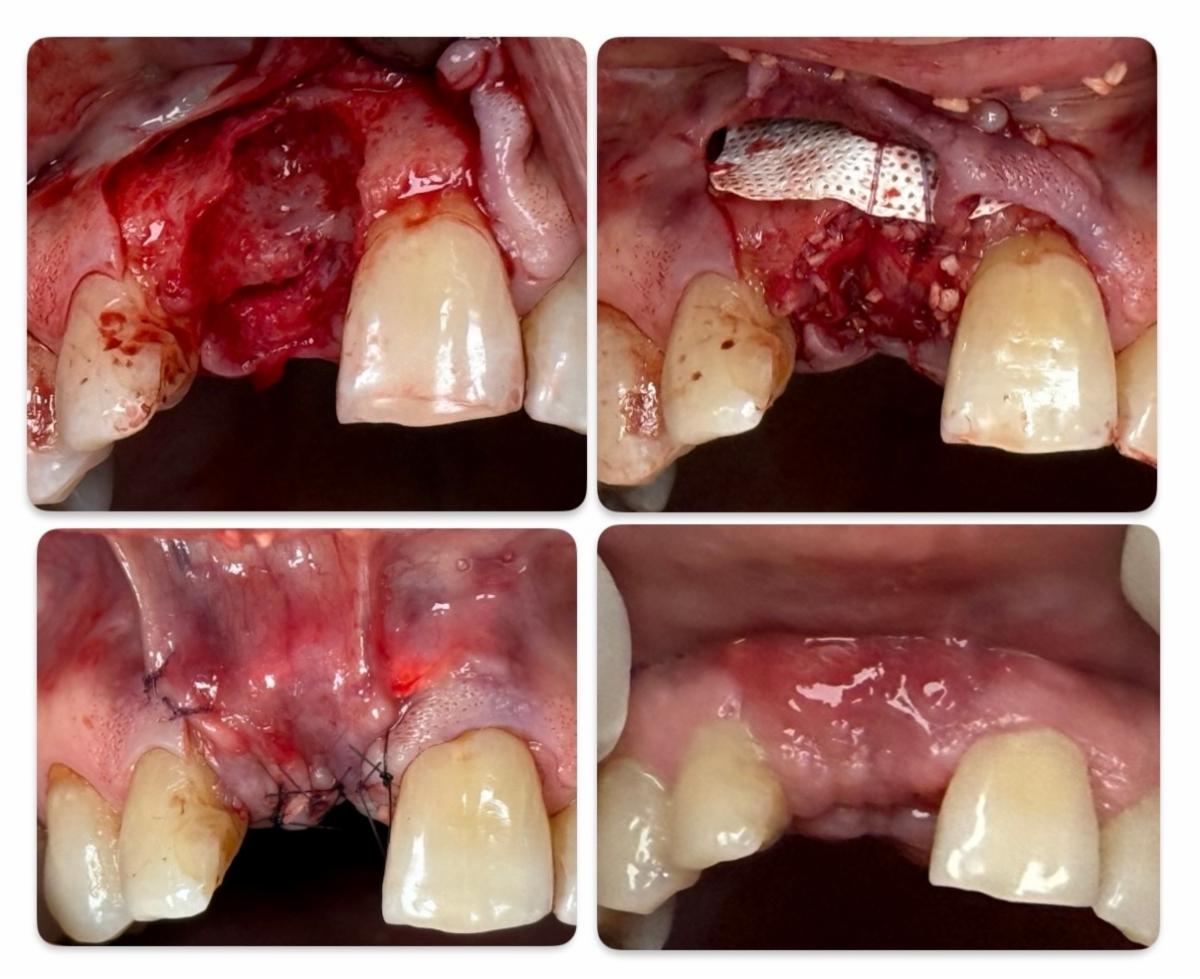
While the bone graft was well-contained, the flap design led to:
- Shortening of the vestibule
- Coronal displacement of the mucogingival junction
These changes disrupted the natural soft tissue contours and may present esthetic challenges for future implant
restoration. Proper recognition and management of these complications are essential and may require additional
soft tissue procedures.
Case 2: Delayed Grafting Advantage
In this case, the extraction of tooth #7 was complicated by a palatal soft tissue dehiscence, making
tension-free primary closure a challenge. The socket was allowed to heal undisturbed for six weeks, during
which new connective tissue developed.
At the time of delayed grafting:
- The new tissue was dissected and used as a pedicle flap for tension-free closure
- No coronal flap advancement was needed
- The vestibular depth and mucogingival junction remained intact
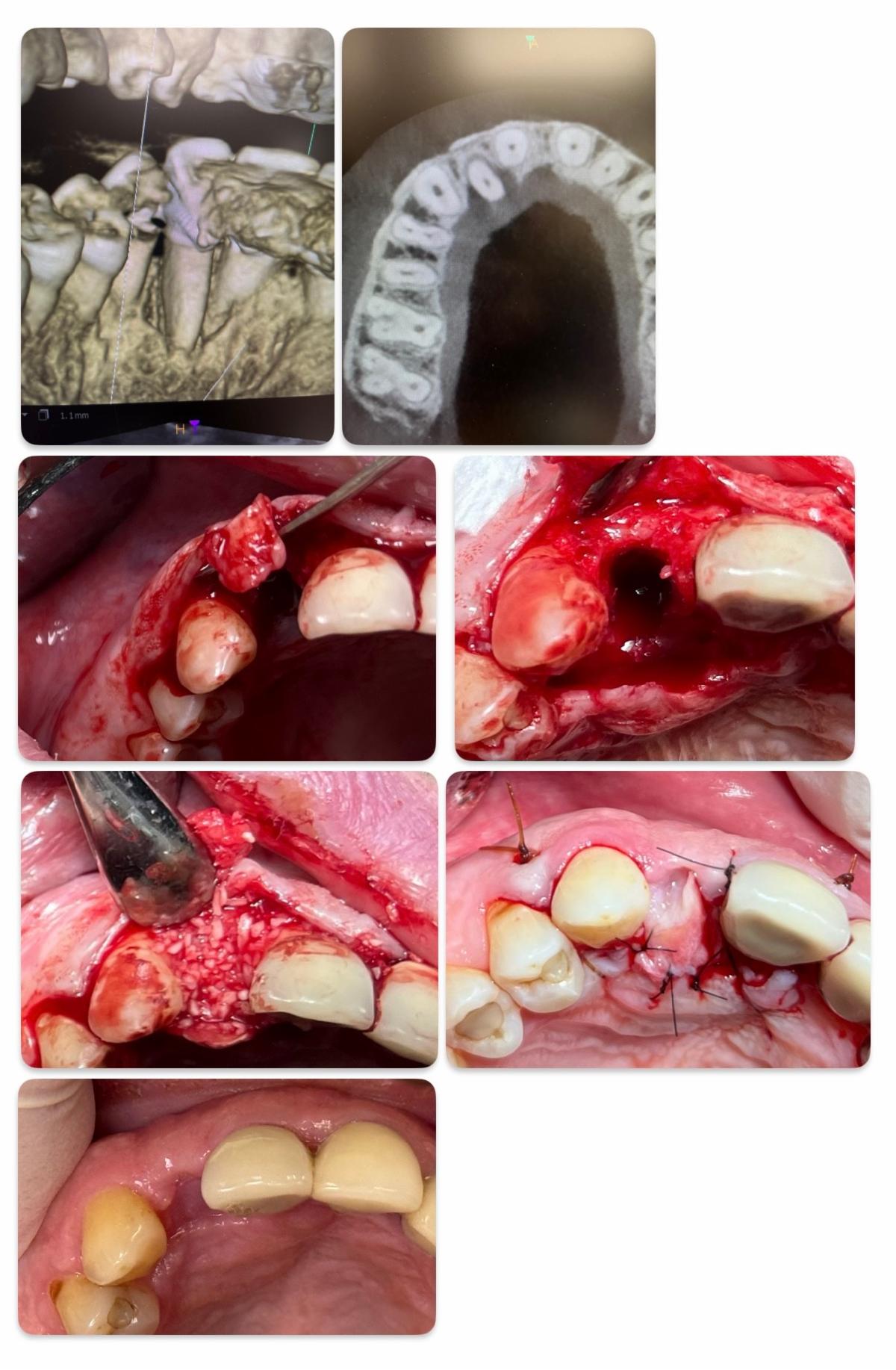
This biologically guided approach preserved the native soft tissue anatomy and led to a superior esthetic result.
Key Takeaways
- Immediate grafting can distort soft tissue landmarks due to flap advancement.
- Delayed grafting supports biologic healing, allowing for improved flap design.
- In the esthetic zone, surgical timing is critical for long-term harmony.
These cases illustrate how thoughtful sequencing supports biologic and esthetic success. By respecting the
healing process and individualizing timing, we can achieve optimal results—especially at the smile line.
Warm regards,
Matthew Flaherty, DMD